One of the biggest trends in luxury travel right now is the move towards ecotourism – travellers wanting to visit natural areas that conserve the environment, support wildlife conservation and experience cultures that sustain local communities.
It was with some trepidation that we recently threw ourselves at the mercy of the Bornean rainforest. The rewards far outweighed the discomfort of early morning starts, the physicality of the work and a few mosquito bites.
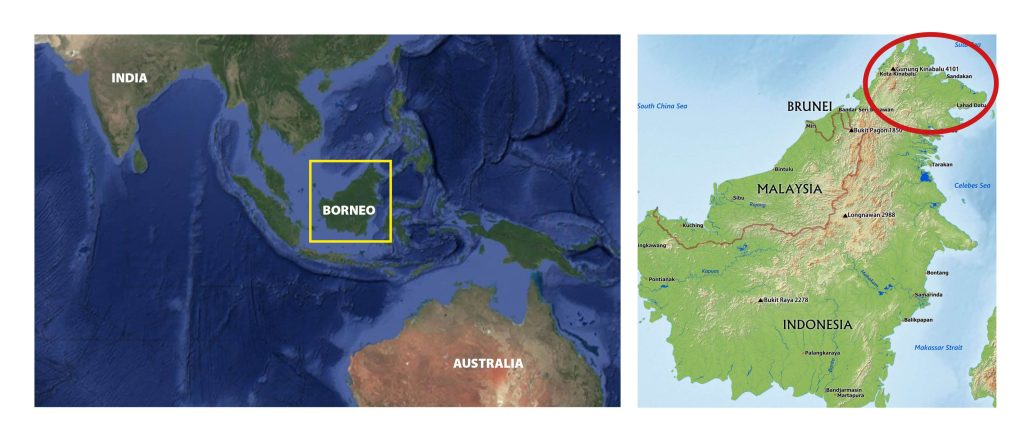
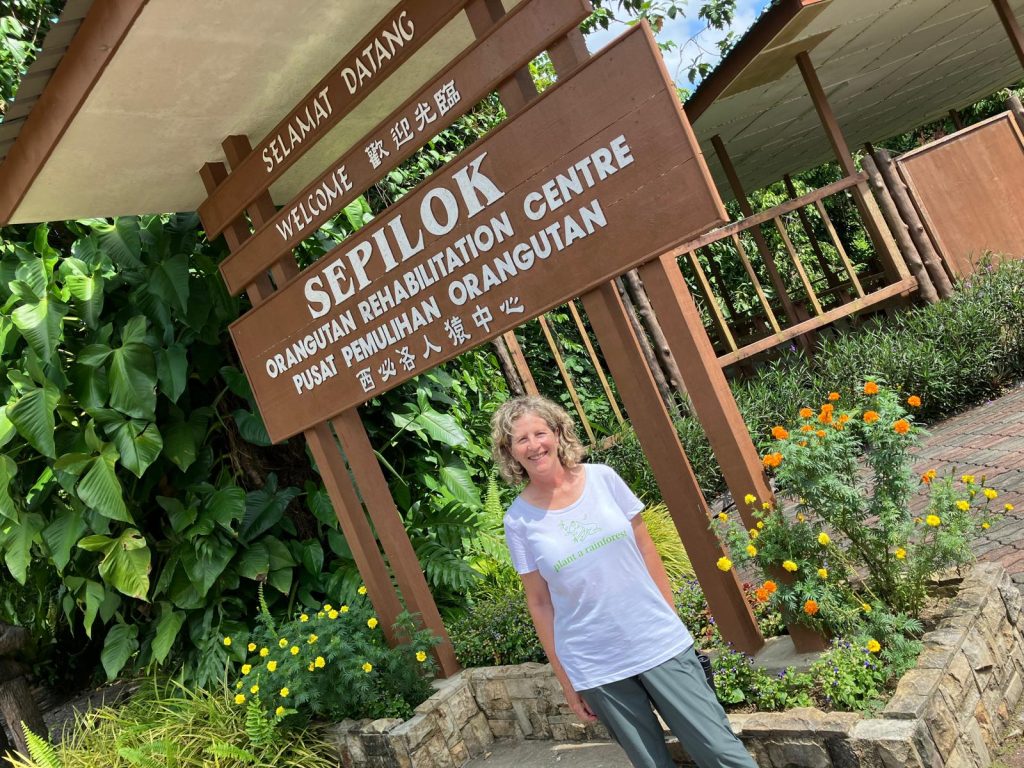
After a flight to Kuala Lumpur and a further three-hour hop to Malaysian Borneo, we joined a small group of volunteers and a guide in the northeast corner of the island for a ten-day project to maintain and replant areas of rainforest – part of a wider government-backed initiative to rebalance the environment ravaged by palm oil plantations.
Each morning, we’d be up at dawn, dressed head to foot in protective clothing (protecting us against insects and searing heat) and armed with a machete.
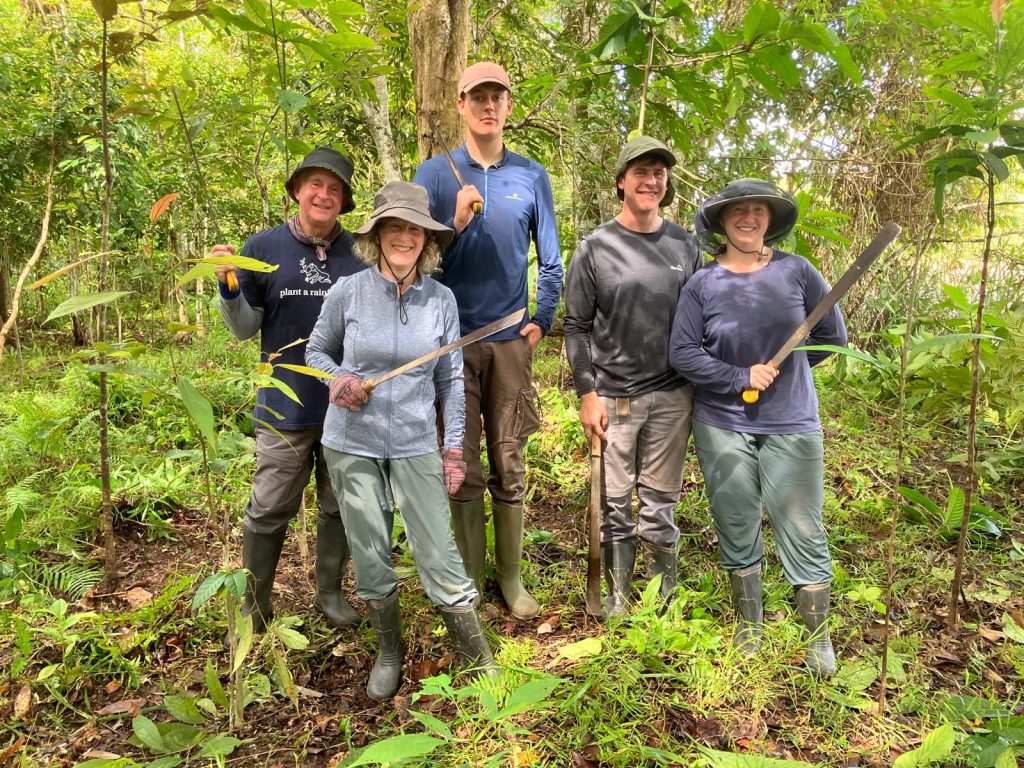
Some days we’d be clearing weeds and vines from indigenous trees planted in previous years; other days were spent planting new saplings, creating wildlife corridors for local animals.
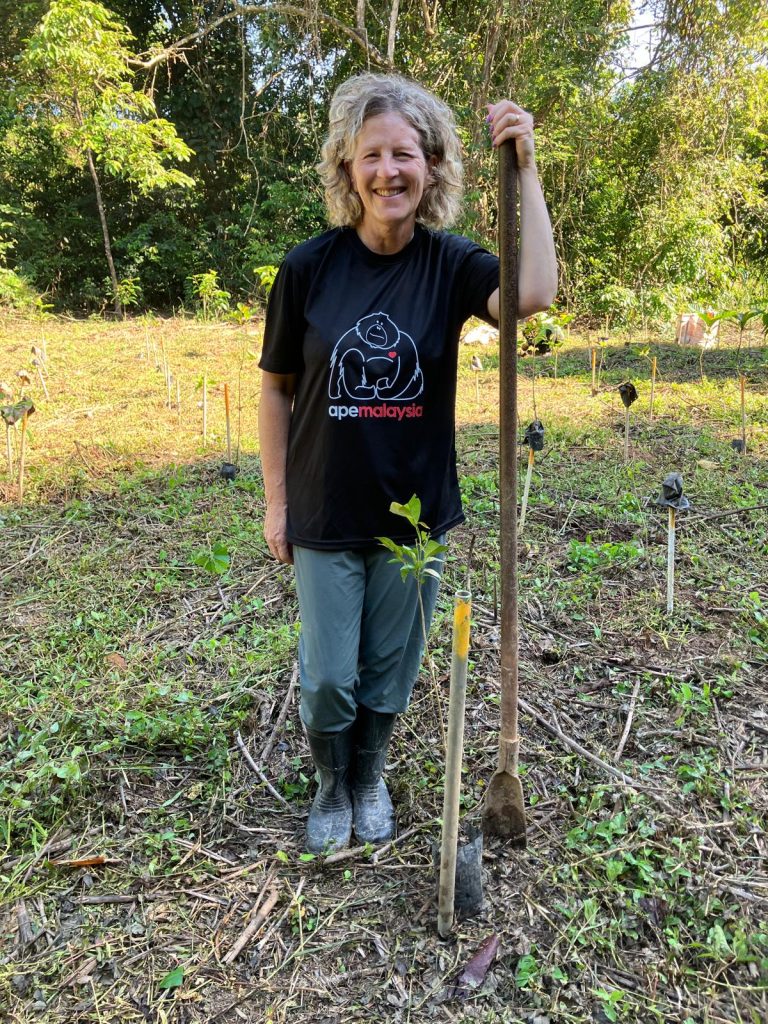
Now I appreciate some of you may be asking – with some justification – whether we’ve lost the plot, and why we would pay for the privilege of volunteering in such conditions!
The answer came each afternoon, when our guides took us along the Kinabatangan River and treated us to breathtaking wildlife sightings: orangutans, pygmy elephants, long-tailed macaques, civet cats, crocodiles, monitor lizards, rhinoceros hornbills, kingfishers, fish eagles, and even a tiny wide-eyed slow loris.
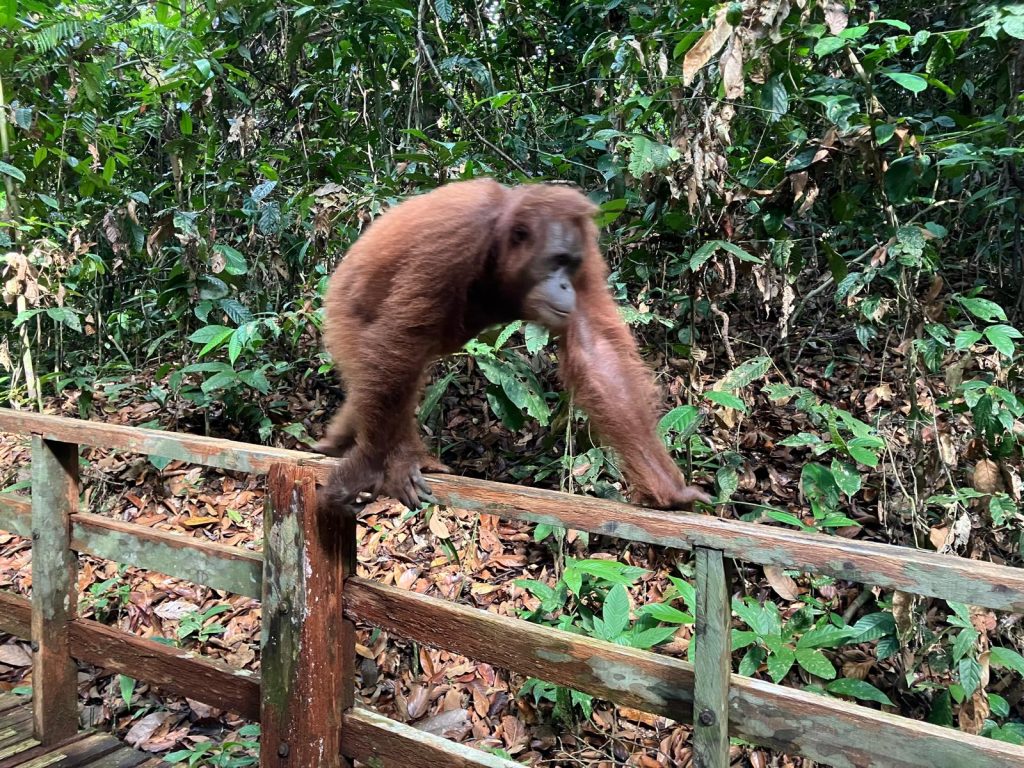
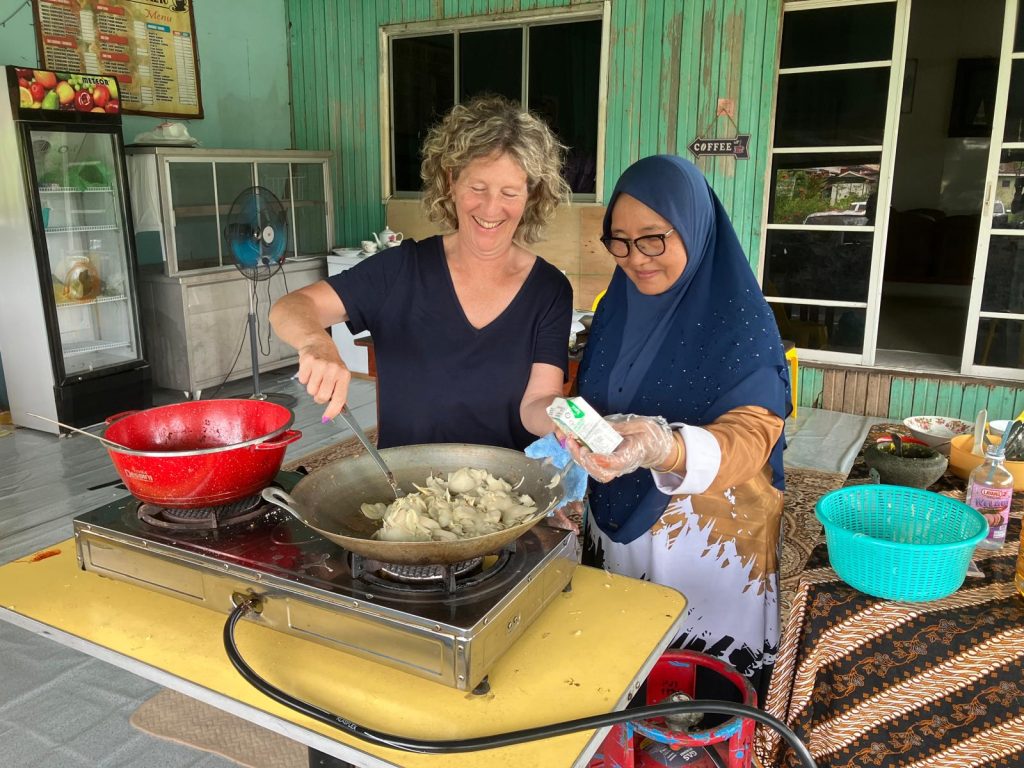
Seeing these animals in their natural environment will stay with us forever. As will the chance to experience local crafting, singing and dancing, and being hosted by local families for lunch and dinner each day. We sat on the floor in their homes, eating authentic local food with our fingers, getting to know these beautiful people despite their lack of English and our lack of Malaysian. On another memorable day, we joined a local ‘auntie’ in her home for a cookery lesson, followed by a feast of the results!
Equally impactful was the time away from our phones. Time to reflect on our place in nature and the beauty of our planet. We learned how and why palm oil has become such an important part of the local economy, and how the animals are adapting to it.
We saw – and were briefly part of – a very different type of existence. Those images and feelings will resonate forever.
At the end of the project, we did treat ourselves to a bit of luxury at a beautiful resort where we laid on the beach and enjoyed elegant cuisine. But having spent ten days away from such comforts made us appreciate them all the more.
Why the surge in ecotourism?
The world is going greener
An increasing number of people have genuine concerns about our impact on the environment and want to take a more responsible approach to seeing the world. The paradox of using long-haul flights to plant trees or look after orangutans isn’t lost on us, although carbon offsetting can alleviate some of the guilt.
Ecotourism is good for you
There’s a real sense that many travellers recognise the mental health benefits of active involvement in regeneration projects. Even the thrill of spotting wildlife sends our adrenalin and endorphin levels soaring, providing effective stress relief and lasting memories.
The desire for experiential travel
Laying on a beach or lounging around a luxury hotel is the perfect escape for many people, but for increasing numbers of travellers, adding ecotourism elements to their trip and gaining insights into local communities makes them feel so much more fulfilled.
What makes ecotourism different?
Ecotourism focuses on education and active engagement through low-impact, small-scale experiences that benefit both nature and communities – a world away from mass tourism. There are now lots of specialist holiday groups offering wildlife conservation experiences such as nature walks, birdwatching, wildlife viewing, and environmental protection or regeneration projects. If you’re curious about ecotourism or wondering if it’s for you, I’d love to share more about this experience.
Gina Silverstone
Luxury Travel Consultant